Almalik: A Warm, Middle-Eastern Display Font for Handmade Creators
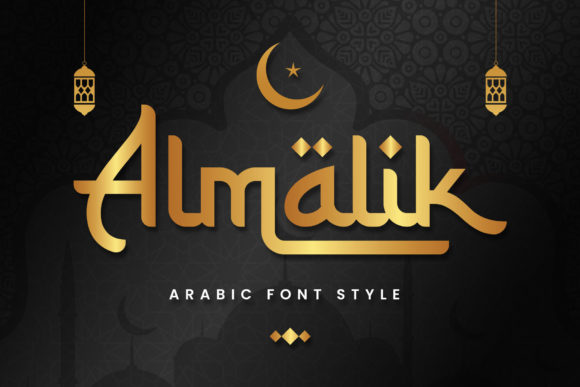
If you've ever searched for a font that feels both elegant and grounded—something that whispers heritage while holding its own on a candle label or wedding welcome board—you’ll understand why Almalik has become a quiet favorite among crafters and small shop owners. It’s not just another decorative typeface. Almalik is an Arabic-style display font reimagined for Latin letterforms—clean, monoline, and deeply intentional. Its roots in traditional Arabic calligraphy give it graceful curves and balanced rhythm, but its adaptation into Latin typography means it works beautifully in real-world product design—not just as art, but as functional, readable, commercially viable type.
As someone who designs printable planners, cuts vinyl for boutique tags, and prints seasonal packaging for handmade soaps and teas, I’ve tested dozens of “exotic” fonts—and many fall short when it comes to cutting accuracy, legibility at small sizes, or licensing clarity. Almalik stands out because it bridges cultural richness with practical craftsmanship. The monoline construction means clean cuts on Cricut and Silhouette machines, even at 12–16pt for sticker labels or jar tags. No thin hairlines to snap, no overly delicate terminals to clog your vinyl weeder. And because it’s designed as a display font—not body text—it shines where it should: on titles, headers, signage, and focal points.
You’ll find Almalik especially effective for projects where mood matters as much as message. Think farmhouse-meets-Marrakech: a hand-poured olive oil bottle with a minimalist label reading “Extra Virgin” in Almalik; a gold-foiled wedding invitation suite where “Amira & Sami” flows across the top like a gentle arch; or a printable Ramadan wall art piece with “Ramadan Mubarak” centered in soft, confident lettering. It carries warmth without being ornate, distinction without distraction. Customers notice it—not as “a fancy font,” but as part of the *feeling* they associate with your brand: thoughtful, authentic, quietly luxurious.
For physical product use, Almalik performs well across scales and substrates. On matte paper invitations? Crisp and inviting. On kraft tags for ceramic mugs? Rich and tactile. On heat-transfer vinyl for tote bags? Bold and legible from three feet away. Just avoid using it for full paragraphs or ingredient lists—it’s not built for extended reading. Stick to short phrases, names, titles, and decorative accents, and you’ll get consistent, professional results every time.
Pairing Almalik thoughtfully elevates your designs further. Try layering it with a relaxed handwritten font for greeting cards—Almalik for the recipient’s name, the script for the personal note. Or combine it with a clean, neutral sans serif (like Montserrat or Poppins) for packaging: Almalik for the product name (“Saffron Honey”), the sans for net weight and origin details. If you're designing digital printables—think planner headers or habit trackers—Almalik adds visual hierarchy without competing with functional elements. Its subtle Middle-Eastern inflection also makes it ideal for culturally resonant collections: Eid gift tags, Persian New Year (Nowruz) SVG bundles, or Levantine-inspired recipe cards.
Before downloading, check what’s included. Most versions of Almalik offer standard Latin characters, basic punctuation, and numerals—but verify support for accented characters if you serve bilingual audiences (e.g., French or Spanish speakers). Some releases include stylistic alternates or ligatures for added refinement—great for wedding stationery or boutique branding. File formats typically include OTF and TTF, compatible with Canva, Adobe Creative Cloud, Cricut Design Space, and Silhouette Studio. Always confirm multilingual coverage matches your needs, especially if you’re creating templates for global markets.
Licensing is where many crafters get tripped up—so let’s be clear: Almalik is a commercial font, and most reputable sellers grant broad commercial rights. That means you can use it to create and sell physical products (stickers, mugs, t-shirts), digital downloads (printables, Canva templates, SVG cut files), client work (logo design, packaging mockups), and even subscription-based design assets—as long as you’re not reselling the font file itself or embedding it in unlicensed web apps. Always review the specific license terms before launching a product line, but know this: when used correctly, Almalik supports your business—not just your aesthetics.
In practice, I’ve used Almalik for everything from lavender-scented candle labels (paired with a light gray sans serif for scent notes) to printable Eid greeting cards (with gold foil accents in mockups), and even as the hero font on a rustic wooden sign for a pop-up bazaar stall. Each time, customers commented on how “inviting” and “distinctive” the typography felt—not flashy, but memorable. That’s the power of a well-chosen display font: it doesn’t shout. It settles in, adds depth, and quietly reinforces your brand’s story.
Whether you're sketching ideas on paper or prepping files for print-on-demand, Almalik reminds us that typography isn’t just about letters—it’s about connection. It’s the difference between a generic “Thank You” tag and one that makes a customer pause, smile, and feel seen. For handmade creators building something meaningful, one label, one card, one mug at a time—Almalik isn’t just a font. It’s a quiet collaborator in your craft.